Tree Service Leads: How to Get More Jobs Without Buying Overpriced Lists

Summarize content with
Buying tree service leads feels like the only option when you need to keep crews busy.
You're shelling out $40, $60, sometimes $120 per lead depending on the job and your market. The vendors promise qualified homeowners ready to hire. What you actually get? A mixed bag where maybe half are legitimate opportunities and the rest are tire kickers, people outside your area, or contacts already committed to another tree service.
Meanwhile, your website sits there doing basically nothing.
People find you through Google searches. They notice your crew working down the street. Friends tell them about the great job you did. They visit your site, spend a minute looking around, then vanish without a trace.
The leads you're buying from third parties aren't better than the people already finding you. They're just getting captured by someone else's system while yours isn't capturing anyone.
Time to change that equation.
What you're actually paying when you buy leads
The sticker price on tree service leads tells only part of the story.
A residential tree removal lead might cost $50-80. Storm damage cleanup leads run higher, maybe $100-150. Emergency work during peak season? Some vendors charge $200+ for a single contact.
But here's the math that matters: if you close one out of every four leads you purchase (pretty typical for the industry), that $60 lead actually costs you $240 per completed job. Just in lead acquisition costs, before factoring in your bid time, fuel driving to estimates, or any other expenses.
And those leads aren't exclusive. The same homeowner's information goes to three, four, sometimes five different tree services simultaneously. The race is on the second that lead hits your inbox. First company to call usually wins, regardless of who offers the best service or most competitive pricing.
Then there's the quality issue. Some people are genuinely ready to hire this week. Others are "just exploring options" with no real timeline. Many are outside your preferred service area or looking for small jobs that don't meet your minimum. You're paying the same price for all of them.
The dependency problem bothers me most. When your pipeline runs on purchased leads, you're building your business on rented ground. The vendor changes their pricing model? You pay more or scramble for alternatives. Their traffic drops? Your lead flow drops. They go out of business? Your pipeline evaporates.
These lead companies aren't wizards. They're running Google Ads, building landing pages, maybe doing some SEO. They capture people searching for tree services, then flip those contacts to multiple tree companies for $60-80 each.
You can run the exact same playbook. Generate the traffic yourself. Capture it through your own systems. Keep every single lead instead of sharing and paying.
Your website problem (and it's probably not what you think)
Most tree service websites look fine on the surface. Professional photos showing your team at work. Clear list of services from removal to trimming to stump grinding. Contact information prominently displayed.
But look at your analytics. Traffic comes in. Visitors browse. Then they're gone.
The problem isn't your website design. It's the complete lack of engagement mechanism.
Think about what happens when someone visits at 8 PM on Tuesday. Their property has a dangerous leaning tree that's been worrying them for weeks. They land on your site looking for answers. Your site just sits there, static, waiting for them to fill out a form or call during business hours tomorrow.
They've got questions right now. "How much does this cost?" "How quickly can you come out?" "Do you handle this type of tree?" Your website makes them work to find answers, clicking through multiple pages, reading paragraphs of text, hoping the information they need is buried somewhere.
Your contact form doesn't help. It asks for their full address, detailed description of the work, property access notes, preferred timeline, budget range. Faced with that much friction, most people think "I'll do this later" and click away. Except they don't come back later. They move on to another tree service whose site is easier to engage with.
The homeowner just wants to know if you can help and roughly what it'll cost. Instead, you're asking them to invest five minutes filling out a detailed form before getting any response.
And there's zero differentiation between someone researching options and someone ready to book immediately. Both get the same "Request a Free Estimate" button and nothing else. No way to get quick information. No path for people not quite ready to commit to an estimate yet.
The engagement system that captures tree service leads
Successful tree service companies aren't relying on static websites. They've implemented systems that actively engage every visitor.
Here's what that looks like in practice.
Immediate two-way conversation
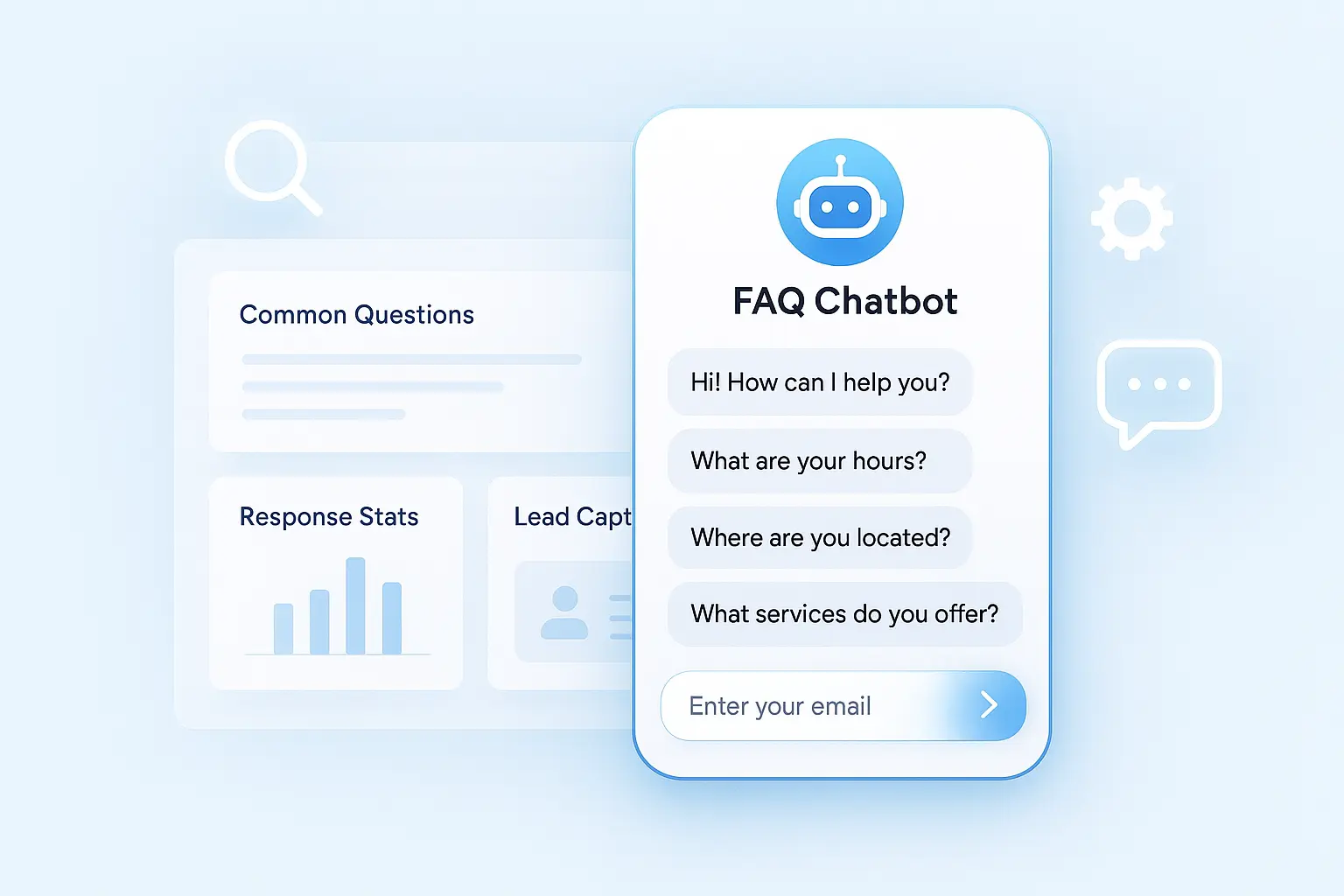
The moment someone lands on your site, they see an option to ask questions. Not buried at the bottom. Not hidden behind menu clicks. Right there, obvious and inviting.
"Need tree work done? I can answer your questions."
Someone clicks and immediately types their concern: "I have a tree leaning toward my house. How soon can you look at it?"
They get an instant response explaining your emergency response process, typical timeline, and what happens next. Not tomorrow. Not Monday morning. Right now at 8 PM when they're on your site.
This works because it mirrors how people actually want to interact. They've got questions. They want answers. Simple as that.
Knowledge that demonstrates expertise
Generic responses kill conversions. "Thanks for contacting us. Someone will reach out within 24-48 hours."
Your engagement system needs to show you actually know tree work. When someone asks about oak tree removal, it should address specific considerations for oaks. When they mention storm damage, it should acknowledge insurance implications and emergency protocols.
Someone asks: "What's the typical cost to remove a 40-foot maple?"
Smart response: "Most 40-foot maples in residential areas run $800-1,500 to remove, depending on access and proximity to structures. Is the tree close to your house or power lines? That affects the approach we'd take."
You're providing real information while gathering details that help you qualify the job.
Natural qualification through dialogue
While helping, you're learning what matters. What's the actual job? Where's the property? What's their timeline? Are they the property owner?
But it flows conversationally, not like an interrogation.
Them: "I need some trees trimmed"
You: "I can help with that. What type of trees are we talking about?"
Them: "Three large oaks in my backyard"
You: "Perfect. Oaks trim well. What's your address so I know the area?"
Them: "[Their location]"
You: "Great, we cover that area. Are you looking to get this done soon or planning ahead?"
By the time this conversation wraps up, you know if it's worth scheduling an estimate. All through helpful back-and-forth, not a form.
Contact capture when they're invested
After providing value and establishing you can help, that's when you ask for their information.
Not immediately when they first reach out. Not before demonstrating you know your stuff. After they've gotten useful answers and recognize you're the expert they need.
"I'd like to schedule someone to look at those trees. What's the best phone number to reach you?"
Or: "Let me get you on the calendar for a free estimate. What's your email and I'll send the details?"
Conversion rates jump because they're already engaged with you. There's rapport. They're not being asked cold.
Immediate scheduling that locks it in
Most tree services lose momentum after getting contact information. You get their phone number, then there's lag.
You call them. They don't answer. You leave voicemail. They call back tomorrow. You play phone tag. Finally connect and schedule for next week. Meanwhile, they've gotten estimates from two faster-moving competitors.
Skip all that friction:
"I can get someone out to look at those trees this week. I've got Thursday afternoon at 2 PM or Saturday morning at 9 AM available. Which works better?"
They pick. It goes on your calendar. They get confirmation. Done.
From "I need tree work" to "estimate scheduled" in under five minutes. No delays. No back-and-forth. Just immediate forward motion.
LeadJot handles all of this automatically
Everything I just described is what LeadJot does for tree service companies without you lifting a finger.
One-time setup process:
Train it on your business specifics. Upload information about services you offer, areas you serve, typical pricing ranges, how you handle different types of jobs, common tree issues in your region.
Define what makes a qualified lead for you. Minimum job size? Specific service area? Timeline requirements? LeadJot asks these questions naturally during conversations.
Connect your scheduling system. Link your calendar. When someone's qualified and ready, LeadJot books estimates directly.
Set your communication style. Professional and technical? Friendly and approachable? Match it to your brand.
Add it to your website. One line of code. Thirty seconds to implement.
Then it runs continuously:
Storm rolls through overnight. Homeowner wakes up to a large branch blocking their driveway. They Google "emergency tree removal [city]" at 6 AM and find your site.
They click the chat: "I need emergency help with a fallen branch."
LeadJot responds immediately: "I can help. We handle emergency tree work 24/7. How large is the branch and where did it fall?"
Quick exchange follows. LeadJot qualifies them (location, urgency, property access), captures their contact details, and books an emergency visit for that morning.
You check your schedule at 7 AM. Emergency job already booked. Customer qualified and waiting. Zero effort from you.
How to actually generate tree service leads consistently
Top tree service companies aren't just buying leads or hoping for referrals. They've built systems that generate leads from multiple sources.
Own your local search presence
When homeowners search "tree removal near me" or "tree service [city]," you need to dominate those results.
Start with Google Business Profile. Free tool, thirty minutes to set up properly. Add photos of your crew and completed jobs. List every service you offer. Define your coverage area precisely. Most importantly, collect reviews religiously after every job.
Reviews matter more than almost anything else for local search. Someone searching for tree services sees your listing with 47 five-star reviews next to a competitor with 8 reviews? They're calling you first.
Create dedicated pages for each service area you cover. Not just one generic "Service Areas" page. Individual pages: "Tree Removal in [Neighborhood]," "Tree Service in [Town]." Include local details, mention local tree species, reference community landmarks.
Publish helpful local content. "Common Tree Problems in [Region]" or "When to Remove vs. Trim: Guide for [City] Homeowners." This content ranks in search results and attracts people researching tree work.
Get listed everywhere locally. Yelp, Nextdoor, local business directories, Chamber of Commerce. Consistent information across all platforms helps your rankings.
This takes months to show results. But a year from now, you'll get steady free leads from Google while competitors keep paying for theirs.
Strategic Facebook advertising
Social media works differently than search. People aren't actively looking for tree services. You're catching attention while they scroll.
But it's powerful for building local awareness and capturing people before they have emergencies.
Target homeowners in your service area specifically. Facebook lets you target by exact location, homeownership status, home value, property type.
Showcase your work visually. Before/after photos of tree removal jobs. Time-lapse videos of large tree takedowns. Drone footage showing your crew at work. Visual content performs best.
Offer seasonal services. "Fall Tree Inspection - Catch Problems Before Winter Storms" or "Spring Pruning Special." Give people reasons to engage before they have emergencies.
Run storm response campaigns. When bad weather hits your area, immediately run ads: "Storm Damage Cleanup - Available Today." People actively need help and see your ads.
Share educational content. Quick videos about tree health, when to call professionals, how to spot dangerous trees. You position yourself as the local expert.
Retarget your website visitors. Someone checked out your site but didn't book? Show them ads featuring customer testimonials or time-sensitive offers.
Social media leads need more nurturing than search leads. They're earlier in the decision process. But they're cheaper and can be high quality with proper follow-up.
Maximize your truck advertising
Your service vehicles are mobile billboards driving through neighborhoods where your ideal customers live.
Make your trucks work harder. Company name in huge letters visible from 100 feet away. Phone number large and clear. Website prominently displayed. Simple tagline like "24/7 Emergency Service" or "Licensed & Insured."
When you're working at a job site, you're advertising to the entire neighborhood. Neighbors see professional-looking trucks, watch skilled crews working safely, notice good cleanup afterward. They file your name away for when they need tree work.
Put yard signs at every job site. "Tree Work by [Your Company]" with phone number and website. Neighbors walking by see it. They look you up immediately.
This isn't a massive lead source by itself. But it's consistent, costs almost nothing after initial investment, and reinforces your local presence.
Turn customers into referral machines
Your best tree service leads come from satisfied customers telling neighbors, friends, and family about you.
Think about tree work's visibility. When you remove a large tree or do major pruning, the whole neighborhood notices. Neighbors see the transformation and think about their own trees. That's when you want your customer recommending you.
Make referrals easy and rewarding:
Ask every customer at project completion: "If your neighbors ask about the work we did, we'd love to help them too. Here's some cards you can share."
Incentivize actively: "$100 credit for every neighbor you refer who books work with us."
Provide referral tools: Business cards. Door hangers they can distribute. A simple text link: "Check out the tree service we used: [yoursite.com]"
Follow up later: Month after the job, check in. "How are those trees looking? And if any neighbors have mentioned needing tree work, we'd appreciate the referral."
Feature their property: With permission, share before/after photos on social media. Tag them. Their network sees the transformation.
Referrals close at double or triple the rate of other leads because they arrive with built-in trust. Someone they know vouches for your work.
Partner with complementary businesses
Other local businesses serve the same homeowners who need tree services.
Strategic partnerships:
Landscaping companies. They work on properties and often encounter tree issues beyond their scope. Partner and exchange referrals.
Property managers and HOAs. They manage multiple properties needing regular tree maintenance. Become their preferred tree service provider.
Real estate agents. They work with buyers and sellers who need tree work before listings or after purchase. Build relationships and exchange referrals.
Insurance agents. When storms hit, they deal with claims that often involve tree damage. Be the tree service they recommend to clients.
Home inspectors. They identify tree issues during inspections. Partner so they refer homeowners to you for remediation.
Structure simple arrangements. You send business their way when appropriate. They refer tree service needs to you. Or establish referral fees for completed jobs.
Leverage storm events strategically
Storms create immediate, urgent demand for tree services. Have a system ready to capture that surge.
Monitor weather actively. When storms are forecasted for your area, prepare to scale up response.
Launch storm response immediately. As soon as weather passes, run Facebook ads: "Storm Damage? We're Available Now." Post on local Facebook groups offering emergency service.
Respond extremely fast. During storm aftermath, whoever responds first gets the work. Have systems to handle high call volume and book jobs rapidly.
Go where the damage is. Drive through affected neighborhoods. Knock on doors where you see tree damage. Leave door hangers offering emergency service.
Follow up on emergency work. Homeowners who needed emergency removal often need additional tree work done. Follow up two weeks later offering to assess their other trees.
Storms are high-revenue opportunities if you're positioned to capitalize quickly.
Build a system, not just tactics
Here's how tree service companies create predictable lead generation:
Multiple traffic sources working simultaneously. Google search brings people actively looking. Facebook builds awareness. Truck advertising reinforces local presence. Referrals provide steady quality leads.
Every website visitor gets engaged through LeadJot. Questions answered immediately. Leads qualified automatically. Estimates booked 24/7 without you involved.
Lightning-fast follow-up. Every lead gets contacted within minutes. Speed matters more in tree services than almost any other industry.
Systematic referral requests. Every happy customer becomes a potential referral source through simple processes.
Everything tracked and measured. You know which sources generate leads, which leads close, what your cost per job actually is.
This isn't one magic tactic. It's an integrated system where multiple channels feed qualified leads into automated capture and follow-up.
Start with the highest-leverage actions
Don't try implementing everything simultaneously. Focus on biggest impact first.
This week: Deploy LeadJot on your website. Twenty minutes to set up. Immediately starts capturing and qualifying visitors 24/7.
Next week: Optimize your Google Business Profile completely. Add photos, update services, request reviews from last ten jobs.
Week three: Launch modest Facebook ad test. $40-50 daily budget offering free tree assessments or targeting storm season preparation.
Week four: Systematize referral requests. Make it standard process after every job.
Month two: Create location-specific pages for every area you serve. Start publishing helpful local content.
Month three: Analyze what's working. Double down on best-performing channels. Refine messaging based on results.
Within ninety days, you'll have multiple lead sources operating and systems capturing them automatically.
Stop renting leads from someone else
Tree service companies dependent on purchased leads are building on quicksand. Vendor changes terms? You're stuck. Prices increase? Pay or starve. Quality drops? Accept it or scramble.
Companies generating their own leads control their destiny. They own the traffic sources. They own the leads. They're not racing competitors for shared contacts.
You can build identical systems. Foundation is simple: website that captures visitors instead of watching them leave.
Deploy LeadJot on your tree service site today. Twenty-minute setup. $49+ monthly. It engages every visitor, answers their questions, qualifies them against your criteria, and books estimates automatically.
Most tree services see 8-15 additional booked estimates monthly from traffic already coming in. That's 96-180 extra opportunities annually from people who found you anyway but were leaving without booking.
Stop sharing leads with competitors. Stop paying premium prices for mixed-quality contacts. Start generating your own high-quality tree service leads.
Try LeadJot free for 7 days and discover how many potential customers you've been losing.
Your next $2,000 tree removal job is probably browsing your website right now. Make sure they book an estimate instead of disappearing.