Stop Overpaying for Solar Leads: Capture More From Your Own Traffic

Summarize content with
You're paying $75 per solar lead. Sometimes $150. Sometimes more.
And half of them are garbage. Wrong state. Already signed with someone else. Just tire-kickers who filled out a form on Facebook to see pricing.
Meanwhile, people are visiting your website right now. They're looking at your projects. Reading about your process. Checking your service area. And then they leave without contacting you.
You're buying leads from other companies while your own traffic walks away for free.
Let's fix that.
The real cost of buying solar leads
Let's be honest about what you're actually paying for when you buy solar leads.
The leads are expensive. Residential solar leads run $50-150 each depending on the source. Commercial solar leads can hit $200-500. If you're closing 10-20% of them, you're paying $500-750 in lead costs alone per deal.
The quality is inconsistent. Some lead vendors sell the same lead to 5 installers. You're competing against four other companies for the same homeowner. Others sell aged solar leads that are weeks or months old. By the time you call, they've already made a decision.
You have no control. The leads come when they come. You can't control volume, quality, or timing. When the market gets competitive, prices go up. When lead sources dry up, you're stuck.
You're dependent. Your entire pipeline depends on someone else's ability to generate leads. If they change their model, raise prices, or go out of business, your pipeline disappears overnight.
Here's the thing: those lead gen companies aren't doing anything magical. They're running ads, building websites, and capturing people who are interested in solar. Then they're selling that person's information to you.
You can do the exact same thing. And keep 100% of the leads instead of paying someone else for them.
Why your website isn't generating leads
You're getting traffic. Maybe not a ton, but people are visiting. They found you through Google, a referral, a yard sign, whatever.
But they're not filling out your contact form. Here's why:
Your contact form is buried. It's on a separate "Contact" page. By the time someone clicks around enough to find it, they've already left or moved on to your competitor.
You're asking for too much information. Name, address, phone, email, property type, roof size, current electric bill, preferred install date. That's not a form. That's a job application. Nobody wants to spend 5 minutes filling that out just to get a quote.
You're not available when they visit. Most people browse websites at night or on weekends. Your office is closed. So they submit a form (if they bother) and by the time you call them back Monday morning, they've already talked to two other installers.
There's no engagement. Your website is just information. Pictures of panels. Descriptions of your process. Maybe some customer reviews. But there's no way for someone to actually interact with you unless they're ready to fully commit to filling out a contact form.
You're not answering their questions. They want to know if you service their area, what the cost looks like, how long installation takes, whether they qualify for incentives. If they can't get quick answers, they leave.
The result? You're spending money on SEO, ads, or yard signs to drive traffic to your website, and then that traffic leaves without converting. You're doing the hard part (getting people to your site) but failing at the easy part (capturing their information).
How solar installers actually generate their own leads
The installers who stopped buying leads and started generating their own did three things:
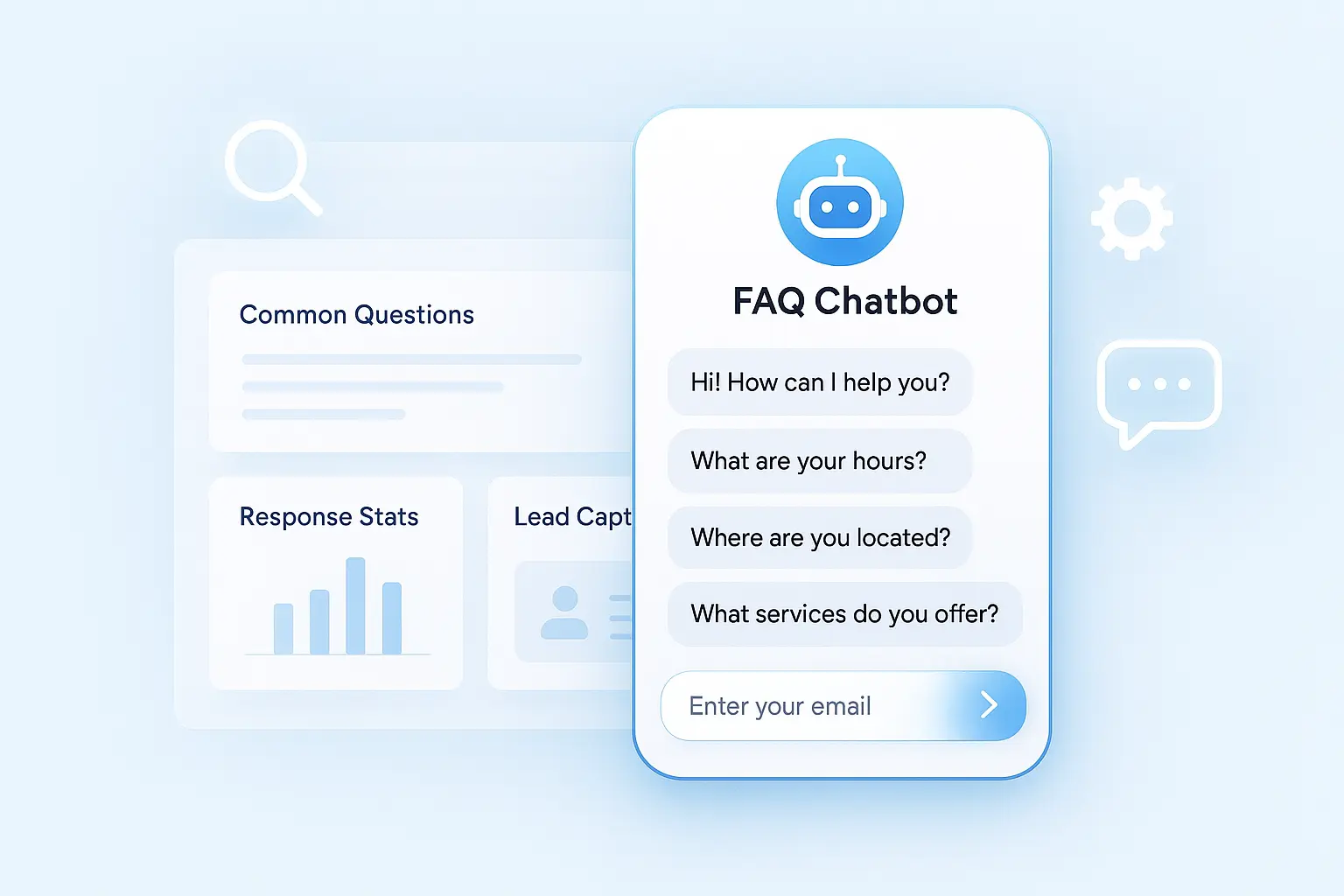
They made it easy to engage. Instead of forcing people to fill out forms, they added a way to ask questions right on their website. A chatbot that answers common questions instantly.
They responded immediately. When someone showed interest, they captured that lead instantly and responded in seconds, not hours or days.
They qualified leads before wasting time. They asked the key questions upfront (service area, homeowner status, rough electric bill) so they only spent time on people who were actually qualified.
Let me show you exactly how this works.
The system that works for solar companies
Here's the exact process solar installers are using to generate their own leads:
Step 1: Answer questions instantly
Someone lands on your website. They're looking at your residential solar page. They have questions: "Do you serve my area?" "How much does a typical system cost?" "How long does installation take?"
Instead of hoping they'll fill out a form, you give them a way to get answers immediately. A chat widget appears on your site: "Questions about solar? I can help."
They click it. They ask "Do you install in [their city]?"
Your chatbot (trained on your service areas and information) responds instantly: "Yes, we serve [their city] and the surrounding areas. We've installed over 200 systems in [county] in the past two years."
They're engaged. They're getting answers. They're staying on your site instead of leaving to check your competitors.
Step 2: Qualify them naturally
As the conversation continues, your chatbot asks the qualifying questions that matter:
"Are you the homeowner?" (Renters can't make the decision)
"What's your average monthly electric bill?" (Tells you system size and whether they qualify)
"When are you looking to install?" (Filters out people who are years away)
But it doesn't feel like an interrogation. It's conversational. Natural. Like texting with a helpful person who actually knows what they're talking about.
If someone doesn't qualify (they're renting, or they're in a state you don't serve, or their bill is $30/month), the chatbot handles it gracefully and doesn't waste your time.
Step 3: Capture their information
Once someone is engaged and qualified, that's when you ask for their contact information.
"I'd love to get you an accurate quote. What's the best email to send that to?"
Or: "Want me to have one of our solar experts call you? What's your phone number?"
By this point, they've already answered questions and gotten value. They're not starting from zero. So the conversion rate on this ask is way higher than a cold contact form.
Step 4: Book them immediately
Here's where most solar companies lose leads: the back and forth.
You email them. They email back. You suggest times. They're busy. You suggest more times. By the time you actually get them on a call, they've already talked to your competitors.
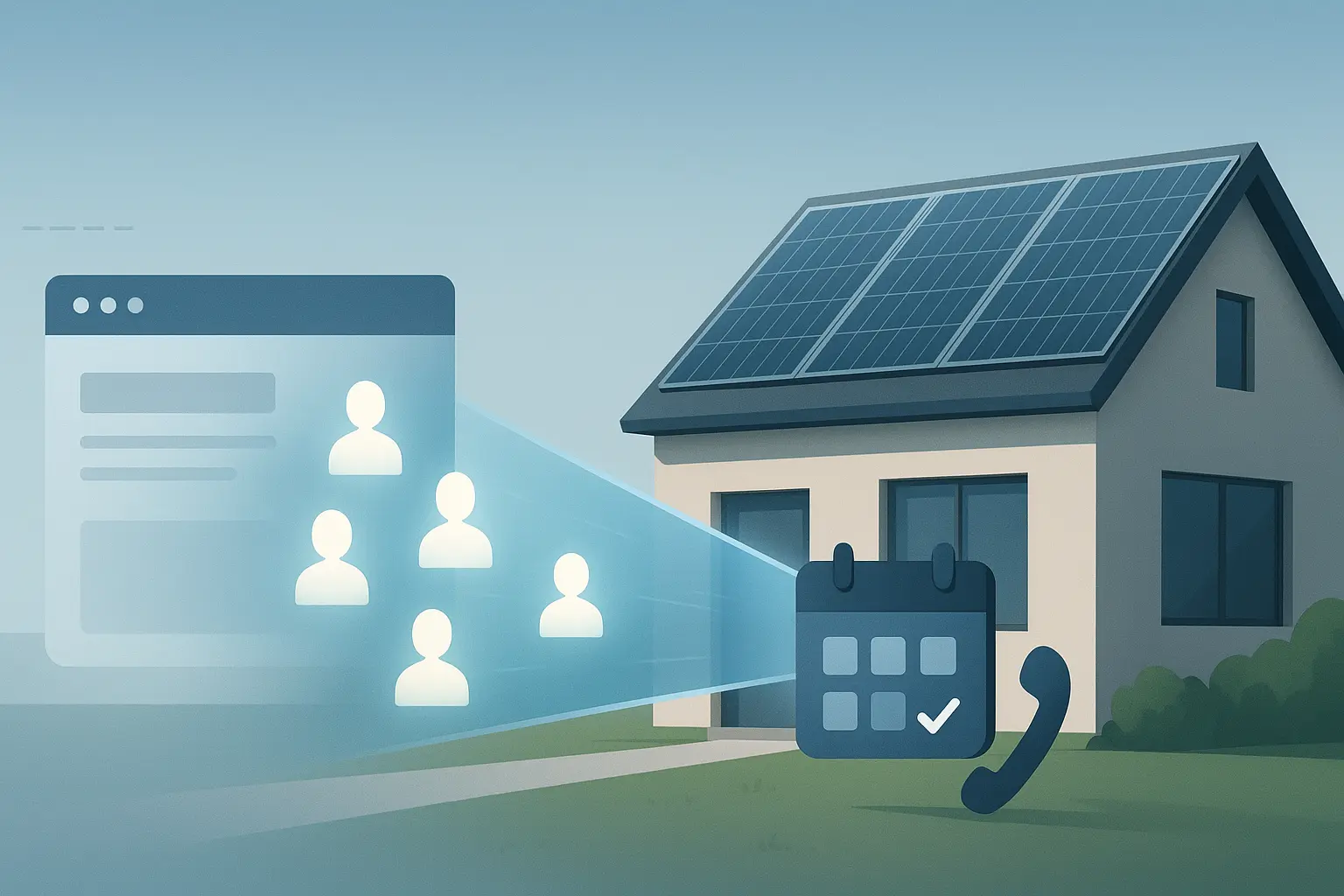
Instead, your chatbot books them directly on your calendar:
"I can get you on the schedule for a free consultation. Here are some times that work. When's best for you?"
They pick a time. It goes on your calendar. They get a confirmation. Done.
No back and forth. No delay. They went from browsing your website to booked on your calendar in 3 minutes.
This is exactly what LeadJot does
Everything I just described is what LeadJot does automatically for solar installers.
You set it up once. Tell it your service areas, your qualifying questions, what you want to know about leads. Connect your calendar.
Then it works 24/7:
Someone visits your site at 9 PM on Saturday. LeadJot chats with them, answers their questions about solar, qualifies them, captures their info, and books them on your calendar for Monday.
Someone lands on your site from a Facebook ad. LeadJot immediately engages them, asks if they're in your service area, finds out their electric bill range, and gets them booked for a quote.
Someone Googles "solar installer near me," finds your site, and has questions. LeadJot answers them instantly instead of making them wait until you check your email tomorrow.
You wake up Monday morning to 3 new consultations booked, all qualified, all ready to talk.
How to set it up for your solar business
Setting up LeadJot for a solar company takes about 20 minutes.
Create your knowledge base. Upload info about your company, your process, your service areas, typical system costs, financing options, incentives, whatever people ask about. This trains the AI to answer questions correctly.
Set your qualifying questions. Tell LeadJot what matters: homeowner status, location, electric bill range, installation timeline. It'll ask these naturally in conversation.
Connect your calendar. Link your Cal.com or Google Calendar. When someone is qualified and ready, LeadJot books them directly.
Customize the chat. Make it sound like your company. Friendly and helpful, or professional and straightforward, whatever matches your brand.
Deploy it to your website. Copy a line of code, paste it on your site. Takes 30 seconds.
That's it. Now every visitor gets instant answers, qualified leads get captured, and consultations get booked automatically.
What you'll see in the first month
Solar installers using LeadJot typically see this in the first 30 days:
More leads from the same traffic. Your website conversion rate goes from 1-2% to 5-8% because you're actually engaging visitors instead of hoping they fill out a form.
Better qualified leads. You're not wasting time on people outside your service area or renters or people with $40 electric bills. The qualifying questions filter them out before they take up your time.
Faster booking. People book consultations the same day they visit your site, not three days later after email ping pong. Speed matters. The faster you get them on a call, the less likely they talk to competitors.
Fewer missed leads. No more "I submitted a form last week and never heard back." Every lead gets an instant response and immediate action.
Lower cost per lead. You're generating your own leads for the cost of the software ($49/month with LeadJot) instead of paying $75-150 per lead to a third party.
If you're getting even 100 visitors per month to your site and you convert just 5 of them into booked consultations, you've replaced $375-750 worth of purchased leads. For $49/month.
The math is obvious.
How to generate solar leads online without buying them
Here's the full strategy solar companies use:
Drive traffic to your website. Local SEO, Google Ads, Facebook ads, yard signs with your website URL, referral links, whatever gets people to your site.
Engage them immediately with LeadJot. Answer questions, qualify them, capture contact info, book consultations. All automatically.
Follow up fast. Show up to the consultation prepared. You already know their situation from the qualifying questions. Make your pitch and close them.
Ask for referrals. Happy customers are your best source of new leads. Make it easy for them to refer neighbors.
Run retargeting ads. People who visited but didn't book see your ads on Facebook and Google. Bring them back.
The key is controlling your own pipeline. When you buy solar leads, you're at the mercy of the vendor. When you generate your own, you control volume, quality, and cost.
Stop paying $75-150 per lead
Every solar lead you buy is money you could have saved by capturing your own traffic.
You're already spending money to drive people to your website. Through ads, SEO, yard signs, referrals, whatever. Don't let that traffic leave without capturing it.
LeadJot costs $49+/month. If it captures even one extra lead per month, it's paid for itself compared to buying leads. Most solar installers see 5-15 extra leads per month from their existing traffic.
That's $375-2,250 in lead costs saved. Every single month.
Set it up once. Let it run 24/7. Watch your pipeline fill with leads you own, not leads you're renting from someone else.
Start your free trial with LeadJot and stop overpaying for solar leads.
Your website traffic is already there. Start capturing it.