Real Time Marketing: How to Connect When It Matters Most
Summarize content with
You know that feeling when a brand says exactly the right thing at exactly the right moment? That's real time marketing in action.
It's not some complicated strategy reserved for huge companies with massive teams. It's simply about paying attention to what's happening right now and responding in a way that feels human.
What Is Real Time Marketing Anyway?
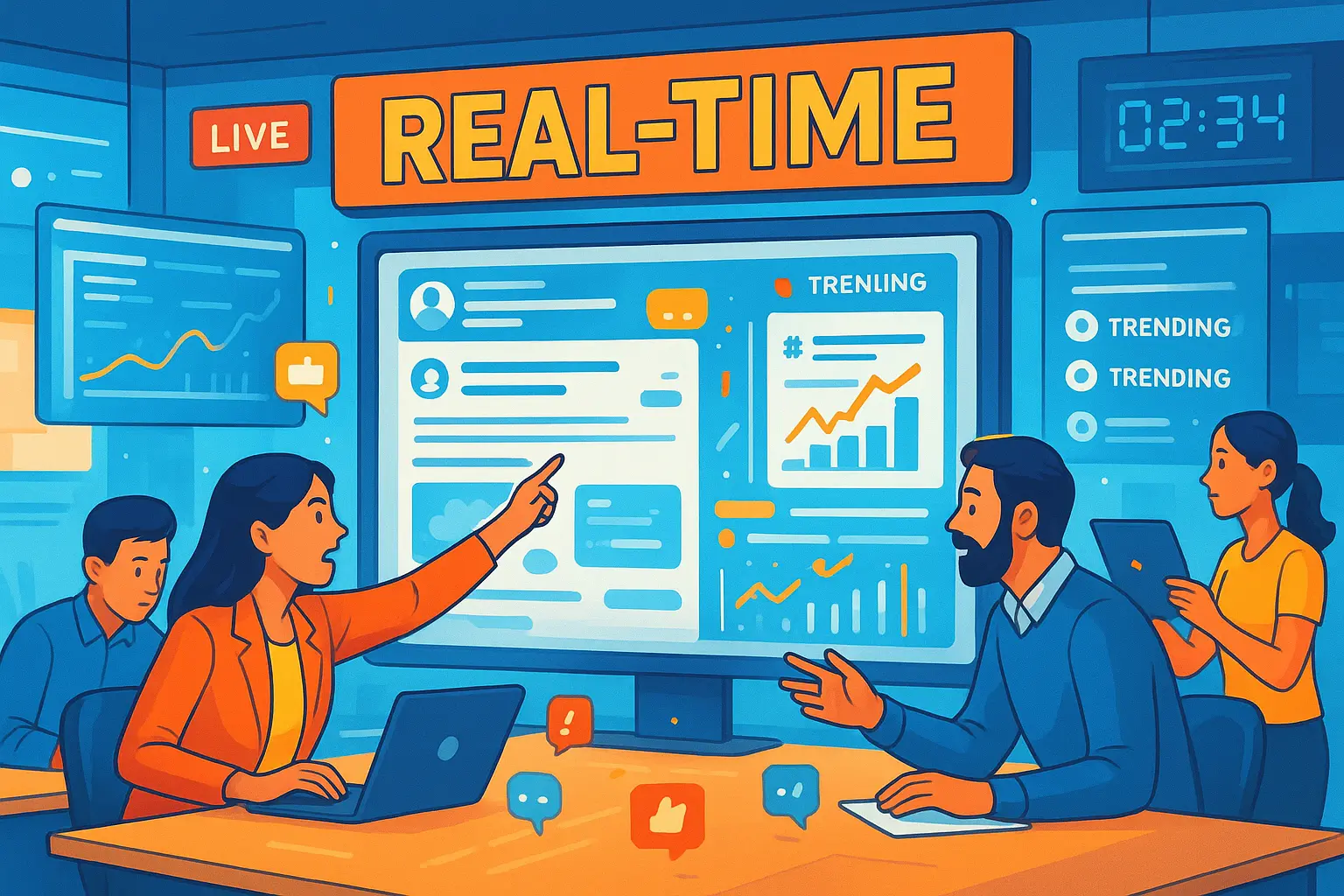
Real time marketing means engaging with your audience based on current events, trending topics, or immediate customer needs. Instead of planning everything weeks in advance, you're reacting to what's happening today, this hour, or even this minute.
Think of it like joining a conversation that's already happening. Someone mentions your industry in a tweet. A customer asks a question on Instagram. A news story breaks that relates to your product. Real time marketing is about showing up in those moments.
The goal isn't to go viral (though that's nice when it happens). It's about being present and relevant when your audience is already paying attention.
Why Real Time Marketing Actually Works
Here's the thing. people are tired of feeling like they're being marketed to. They want brands that feel real.
When you respond to what's happening right now, you show you're paying attention. You're not just blasting out pre-scheduled posts. You're actually there.
Real time marketing works because it creates genuine connections. A quick, timely response to a customer question builds more trust than a perfect campaign that launches three weeks late.
Plus, algorithms love fresh content. Social platforms prioritize recent posts about trending topics. So your real time content often gets better reach than your carefully planned posts from last month.
The Main Types of Real Time Marketing
Most real time marketing falls into a few categories.
Event-based marketing ties into planned events like holidays, sports games, or award shows. You know they're coming, but you create content in the moment as they unfold.
Trending topic marketing jumps on viral moments, memes, or breaking news. This is the riskiest type because trends move fast and not every trend is worth joining.
Customer interaction marketing responds directly to customer comments, questions, or complaints. This might be the most important type because it directly impacts how people feel about your brand.
Newsjacking connects your brand to current news stories. Done well, it positions you as relevant and aware. Done poorly, it looks opportunistic or tone-deaf.
Getting Started Without Losing Your Mind
Real time marketing sounds exhausting, right? Like you need to monitor Twitter 24/7 and have a design team on standby.
Not really.
Start small. Pick one or two channels where your audience actually hangs out. Set up alerts for your brand name, key products, and a handful of industry terms.
Dedicate 15 minutes a few times a day to check what's happening. That's it. You don't need to respond to everything. Just the things that matter to your customers.
Create some simple templates you can customize quickly. A branded image frame. A standard response format for common questions. Approved phrases your team can use without running everything up the chain.
The key is having guidelines that let your team move fast without needing three approval layers. Because in real time marketing, waiting until tomorrow means you've already missed it.
Capturing Leads in Real Time
Here's something most people miss about real time marketing. it's not just about posting content. It's also about capturing interest the moment someone shows it.
When someone engages with your real time post, comments on your response, or reaches out during a trending moment, that's a hot lead. They're interested right now, not next week.
This is where having the right tools makes a huge difference. Something like LeadJot lets you capture and qualify leads instantly while the moment is still fresh. Instead of letting that interest cool off while someone fills out a long form or waits for a callback, you can engage immediately.
The whole point of real time marketing is being present in the moment. That should extend to how you handle the leads it generates too.
When Real Time Marketing Goes Wrong
Let's be honest. some brands crash and burn with this stuff.
The biggest mistake? Trying to be funny or clever about serious topics. Someone died. People are scared. Communities are hurting. That's not the time to sell your product.
Another common mess up is jumping on every single trend. You don't need to have an opinion about every viral moment. Sometimes silence is the right move.
And please, please don't try to force your product into a conversation where it doesn't belong. If you have to really stretch to make the connection, don't make it.
Real time marketing should feel natural. If it feels forced or opportunistic, your audience will smell it immediately.
Real Time Marketing vs Traditional Marketing
Traditional marketing is like writing a letter. You plan it out, craft the perfect message, send it, and wait.
Real time marketing is like having a conversation. It's faster, more flexible, and way less polished.
Both have their place. Your brand still needs strategy, planning, and those bigger campaigns. But real time marketing fills in the gaps. It makes your brand feel alive between the big launches.
Think of traditional marketing as your foundation and real time marketing as your personality showing through.
Tools That Actually Help
You don't need fancy expensive software to start. But a few tools make life easier.
Social media management platforms like Hootsuite or Buffer let you monitor multiple channels in one place. They also let you schedule posts but jump in with real time responses when needed.
Google Alerts is free and tells you when people mention your keywords online.
For tracking what's trending, just check the trending sections on X (Twitter), TikTok, or whatever platforms your audience uses. It's that simple.
If you want to get more sophisticated, tools like Sprout Social or Brandwatch offer deeper analytics and monitoring. But honestly? Start with the free stuff and upgrade only when you're actually using it consistently.
Making It Sustainable
The real challenge with real time marketing isn't doing it once. It's keeping it going without burning out your team.
Set realistic expectations. You're not going to respond to everything. And that's fine.
Create a rotation if you have a team. Different people monitoring different times or days. If you're a one-person show, pick specific times you'll check in and stick to those.
Remember that real time marketing is a marathon, not a sprint. Showing up consistently beats going all-in for a week and then disappearing for a month.
The Bottom Line
Real time marketing isn't about being perfect. It's about being present.
Your audience isn't looking for flawless, corporate-speak responses. They're looking for brands that feel human, that pay attention, that actually care about the moment.
Start small. Pay attention. Respond when it makes sense. Skip the trends that don't fit. And please, always ask yourself if what you're about to post helps your audience or just helps your ego.
Done right, real time marketing makes your brand feel less like a company and more like a helpful person who happens to be really good at what they do.
And honestly? That's the kind of marketing people actually want to see.