How to Generate Solar Leads: The Complete Guide for Installers
Summarize content with
Generating solar leads is the hardest part of running a solar installation business.
You can install panels perfectly. Your customers love you. But if you can't consistently fill your pipeline with qualified homeowners ready to go solar, none of that matters.
Most solar installers try everything. Facebook ads. Buying leads. Door knocking. Google Ads. Yard signs. Referral programs. Some of it works. Most of it wastes money.
Here's what actually works in 2025, based on what successful solar companies are doing right now.
The solar lead generation landscape right now
Let's start with reality. Generating solar leads is more competitive than ever.
Every solar installer in your area is fighting for the same homeowners. Big national companies are spending millions on advertising. Lead generation companies are selling the same leads to multiple installers.
But there's good news: most solar companies are terrible at lead generation. They're doing the same old tactics that worked in 2015. The bar is low.
If you implement even half of what's in this guide, you'll be ahead of 80% of your competitors.
Method 1: Turn your website traffic into leads
This is the lowest-hanging fruit and most solar installers completely ignore it.
You're already getting traffic. From Google. From ads. From people seeing your trucks and looking you up. That traffic is free (or already paid for). But 95% of it leaves without converting.
Why visitors don't convert:
Your contact form is too long. Nobody wants to fill out 8 fields just to ask a question.
You're not available when they visit. Most people browse at night or weekends. Your office is closed.
They can't get quick answers. They want to know if you serve their area or roughly what it costs. They have to dig through your entire site to find out.
There's no easy next step. The only option is "fill out this form" or "call during business hours." Both have too much friction.
How to fix it:
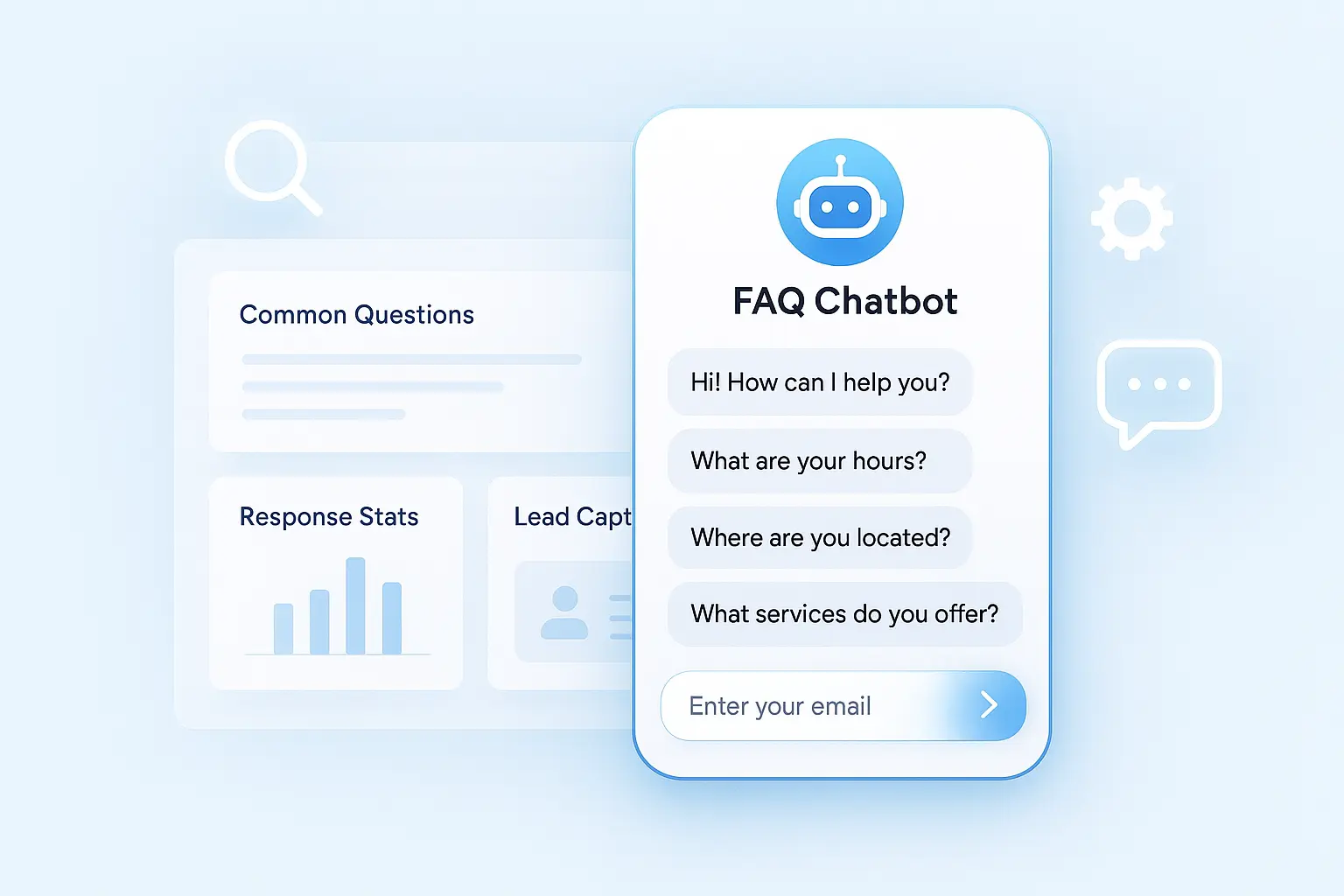
Add a chatbot to your website that answers questions instantly, qualifies visitors, and books consultations automatically.
Someone visits at 9 PM. They ask if you serve their zip code. The chatbot confirms you do. They ask about cost. It gives them a realistic range. They're interested. It qualifies them with a few questions, captures their contact info, and books them on your calendar.
You wake up to a qualified consultation booked. No work on your end.
This is exactly what LeadJot does. You train it on your business (service areas, pricing, process), connect your calendar, and deploy it to your site. Takes 20 minutes to set up. Then it works 24/7 converting visitors into booked calls.
Most solar installers see 5-15 extra booked consultations per month from traffic they were already getting. That's the easiest way to generate solar leads because you're not finding new traffic, you're just capturing what's already there.
Method 2: Local SEO and Google rankings
When someone in your area searches "solar installer near me" or "solar panels [city]," you want to be at the top.
This is called local SEO and it's one of the best sources of solar leads because the intent is so high. They're actively searching for an installer right now.
What you need to do:
Claim and optimize your Google Business Profile. This is free and takes 30 minutes. Add photos of your work, your service areas, contact info, everything. Ask customers to leave reviews. The more reviews you have, the higher you rank.
Get listed in local directories. Yelp, Angi, HomeAdvisor, Better Business Bureau, your local Chamber of Commerce. Make sure your business name, address, and phone number are exactly the same everywhere.
Create location pages on your website. If you serve multiple cities, create a page for each: "Solar Installation in [City]." Include specific info about that area, projects you've done there, local incentives.
Write content that answers local questions. Blog posts like "Cost of Solar Panels in [City]" or "Best Solar Incentives in [State]" rank well and bring in qualified traffic.
Build local backlinks. Get mentioned on local news sites, sponsor local events, partner with other local businesses. Every quality link to your site helps your rankings.
This takes time. You won't rank overnight. But six months from now, you'll be getting consistent free leads from Google while your competitors are still buying them.
Method 3: Google Ads for immediate results
SEO takes months. Google Ads works immediately.
You bid on keywords like "solar installation [city]" or "solar panels near me." Your ad shows up at the top. Someone clicks. They land on your website. Your chatbot engages them and books a consultation.
What makes Google Ads work for solar:
High intent. People searching for solar installers are actively looking right now. They're not casually browsing. They're researching or ready to buy.
Local targeting. You only pay for clicks from people in your service area. No wasted budget on people 500 miles away.
Measurable ROI. You know exactly how much you spend and how many leads you get. If a lead costs $40 and you close 20% of them, you're paying $200 in ad costs per customer. Easy math.
How to do it right:
Start small. $30-50/day budget. Test and learn.
Use location-specific keywords. "Solar installer Phoenix" converts better than just "solar installer."
Send traffic to a specific landing page, not your homepage. One clear message, one clear offer, one clear next step.
Have your chatbot ready to capture leads immediately. Don't just collect form submissions. Engage people the second they land.
Track everything. Use conversion tracking to see which keywords and ads actually generate booked consultations, not just clicks.
Most solar installers waste money on Google Ads because they send traffic to a bad landing page or don't follow up fast enough. If you've got a good site with automated lead capture, Google Ads is one of the fastest ways to generate solar leads.
Method 4: Facebook and Instagram ads
Facebook ads work differently than Google. People aren't actively searching for solar. You're interrupting them while they're scrolling.
But that doesn't mean it doesn't work. You just need a different approach.
What works on Facebook:
Target homeowners in your service area. Facebook's targeting is powerful. You can target by location, homeownership status, income level, even interests like "renewable energy" or "environmentalism."
Lead with value, not a sales pitch. "See if your home qualifies for solar" or "Calculate your solar savings" works better than "Book a consultation now."
Use video. A 30-second video of a happy customer talking about their experience outperforms static image ads every time.
Offer something specific. A free savings calculator. A free roof assessment. A guide to solar incentives. Give them a reason to click that's not just "buy from us."
Use Facebook's lead forms. These let people submit their info without leaving Facebook. Lower friction = more leads.
The process:
Run ads to a lead magnet. "Free Solar Savings Calculator" or "Free Guide to Going Solar in [State]."
They click, fill out a short form (name, email, phone, address).
You follow up immediately. Call them within 5 minutes if possible, or at least send an automated email with the resource they requested.
Move them to a consultation. Once they've engaged with your content, invite them to book a free assessment.
Facebook leads are usually earlier in the buying process than Google leads. They're not actively searching for an installer yet. So they need more nurturing. But the cost per lead is often lower, which makes it worth it.
Method 5: Generate solar leads on your own website with content
This is the long game, but it's incredibly powerful.
You create content that ranks in Google and brings in free traffic for years. Blog posts, guides, videos, calculators, whatever provides value to homeowners researching solar.
Content that generates solar leads:
"How Much Do Solar Panels Cost in [Your State]" - Everyone wants to know this. Create a detailed breakdown with real numbers.
"Solar Incentives and Rebates in [Your State]" - This changes regularly, so updated content ranks well.
"How to Choose a Solar Installer" - Sounds like you're helping competitors, but you control the narrative and establish yourself as the expert.
"Is My Roof Good for Solar?" - Create a simple quiz or checklist people can use.
"Real Cost Savings: Our Customers Share Their Electric Bills Before and After Solar" - Case studies with real numbers perform incredibly well.
Each piece of content should end with a clear next step. "Calculate your savings with our free tool" or "Book a free assessment" with your chatbot right there to help.
This takes time. You won't see results next week. But six months from now, you'll have multiple blog posts ranking in Google, bringing in qualified traffic every single day, for free.
Method 6: Yard signs and vehicle wraps
Old school but still works, especially for local solar installers.
When you install panels on someone's roof, put a yard sign in front of their house. Big, clear, with your company name and website.
Neighbors notice. They see the panels going up. They see the sign. They get curious. They visit your website.
Make sure your website has that chatbot ready to capture them the second they land.
Same with vehicle wraps. Your trucks are mobile billboards. Make sure your company name, phone number, and website are huge and readable. When someone sees your truck at a job site or on the highway, they should be able to Google you immediately.
This isn't a massive lead source, but it's consistent and the cost is basically zero after the initial investment in signs and wraps.
Method 7: Customer referrals
Your best source of solar leads is your existing customers.
Think about it. Their neighbors see the panels. They mention saving money on electricity. People ask questions. If you make it easy for your customers to refer people, they will.
How to generate referrals:
Ask every customer. At the end of the project, say "If you know anyone else considering solar, we'd love to help them too. Here's some cards you can share."
Incentivize it. Offer $250-500 for every referral that becomes a customer. Some installers give both the referrer and the new customer a discount.
Make it easy. Give them a simple link they can text to friends. "Check out the company that did our solar: [yoursite.com]?ref=customer-name"
Follow up. A month after installation, ask how everything is working and remind them you'd love referrals.
Showcase them. With permission, feature their home and savings on your website and social media. Tag them. Their friends will see it.
Referrals are your highest-converting leads because they come with built-in trust. Someone they know already vouches for you.
Method 8: Partner with related businesses
Other businesses serve the same homeowners you're targeting. Partner with them.
Who to partner with:
Roofers. If someone needs a new roof, they might be thinking about solar. If someone wants solar, they might need a roof first.
Real estate agents. New homeowners often want to add solar. Agents can refer clients to you.
Electricians. They work on homes and can mention solar when it makes sense.
HVAC companies. Similar audience, complementary service.
How to structure it:
Simple referral fee. They send you a customer who closes, you pay them $200-500.
Reciprocal referrals. You refer customers to them, they refer to you.
Joint marketing. Split the cost of a local event or mailer.
This won't flood you with leads overnight, but it creates a steady stream of warm referrals from trusted sources.
Method 9: Buy solar leads (but do it smart)
Buying leads gets a bad rap, and for good reason. Most purchased solar leads are overpriced and low quality.
But if you're just starting and need to fill your pipeline quickly, buying leads can work if you do it right.
Where to buy solar leads:
Lead aggregators like EnergySage, Solar Exclusive, or Modernize. Residential solar leads typically cost $50-150 each.
Facebook lead gen campaigns managed by an agency. They run the ads, you get the leads.
Google Ads managed service where someone else runs your campaigns.
How to make purchased leads work:
Respond instantly. The first installer to call usually wins. Set up a system to get notified immediately and call within 5 minutes.
Qualify hard. Don't waste time on bad leads. Ask the key questions fast and disqualify people who aren't a fit.
Calculate your real cost per customer. If leads cost $75 and you close 15% of them, you're paying $500 per customer in lead costs. Is that profitable for you?
Use purchased leads to fill gaps while you build your own lead gen. Don't become dependent on them.
Buying leads should be a short-term strategy while you build long-term systems like SEO, content, and website conversion.
The system that ties it all together
Here's how the best solar installers generate leads consistently:
They drive traffic from multiple sources. Google Ads for quick wins. SEO for long-term free traffic. Facebook ads for awareness. Yard signs and referrals for local visibility.
They capture every visitor with automated chat. LeadJot sits on their website answering questions 24/7, qualifying visitors, and booking consultations automatically.
They follow up fast. Leads get contacted within minutes, not hours or days. Speed matters more than perfect.
They nurture leads that aren't ready yet. Email sequences, retargeting ads, helpful content. Stay top of mind until they're ready.
They ask every customer for referrals. Make it easy and incentivize it. Your best leads come from happy customers.
They track everything. They know which sources generate the most leads, which convert best, and what their real cost per customer is.
This isn't one tactic. It's a system where multiple lead sources feed into an automated capture and follow-up process.
Start with the easiest wins
You don't need to implement all of this at once. Start with what will have the biggest impact fastest.
Week 1: Set up LeadJot on your website to capture the traffic you're already getting. This takes 20 minutes and immediately starts converting visitors into booked calls.
Week 2: Optimize your Google Business Profile and ask your last 10 customers to leave reviews. This is free and helps your local rankings.
Week 3: Create one great piece of content. "Complete Guide to Solar in [Your City]" or "Real Cost of Solar: What [City] Homeowners Actually Pay." Publish it and share it everywhere.
Week 4: Launch a small Google Ads or Facebook Ads campaign. $30/day. Test and learn what messaging works.
Month 2: Start a referral program. Email your past customers offering $500 for every referral that closes.
Month 3: Add more content, improve your ads based on what's working, and keep optimizing.
Within 90 days, you'll have a lead generation system that consistently fills your pipeline without you having to hunt for leads every single week.
Stop hunting, start attracting
The solar installers struggling with leads are the ones constantly hunting. Buying leads. Cold calling. Door knocking. It's exhausting and expensive.
The ones crushing it have systems that attract leads automatically. Their website works 24/7. Their content ranks in Google. Their customers refer friends. Their ads bring in qualified traffic that converts immediately.
You can build the same system. Start with the foundation: a website that actually converts visitors into booked calls.
Set up LeadJot on your site today. 20 minutes of setup. $49/month. If it books even one extra consultation per month, it's paid for itself compared to buying leads.
Most solar installers see 5-15 extra booked calls per month from traffic they were already getting. That's 60-180 extra consultations per year. From people who were visiting your site anyway and leaving without booking.
Stop letting qualified leads slip away. Start capturing them automatically.
Try LeadJot free for 7 days and see how many solar leads you've been missing.
Your pipeline doesn't need to be a constant struggle. Build the system once, and let it work for you.